
Below are some tips that can work to help lose weight:
- Prioritize protein
Protein is a key nutrient that has many benefits to support our health and wellbeing such as aiding in muscle repair and growth. Protein also supports our lean muscle mass, which is important to consider when wanting to lose weight. Protein is digested slowly in the body helping us to stay fuller for longer.
Tip: When consuming protein choose lean protein sources such as lean beef, chicken, eggs, lamb, fish, skinless chicken or turkey, tofu, and legumes/lentils.
- Focus on adequate fibre intake
Fibre is a key nutrient found in a wide range of foods such as fruits, vegetables, wholegrains, legumes, nuts, and seeds. Fibre provides numerous health benefits such as supporting digestion and regular bowel movements, gut health, healthy gut microbiota, and aiding in blood sugar control.
By adding fibre to our meals this increases our satiety (feelings of fullness) after consuming, as it is digested slowly in the body. This can help us to eat less as we will feel fuller for longer after meals.
Tip: Try incorporating a wide variety of coloured non-starchy vegetables which ensures we are getting a range of micronutrients, vitamins, and minerals. For example, tomato, cucumber, broccoli, cauliflower, spinach, capsicum, zucchini, brussels sprouts, carrot, onion, eggplant, and mushroom.
- Carbohydrate
Carbohydrate helps us to stay energised being our predominant energy source for our brain and muscles. Like protein, and fibre adding carbohydrate to our meals helps us to feel full and satisfied after a meal. This leads to us snacking less and having less cravings on unhealthy foods later in the day.
Tip: When incorporating carbohydrates in meals choose low GI carbohydrates such as multigrain bread, legumes, lentils, corn, brown rice, and sweet potato (orange flesh). Low GI carbohydrates are digested in our body slowly causing less of a spike in blood sugar (glucose) levels.
- Managing Portion Size
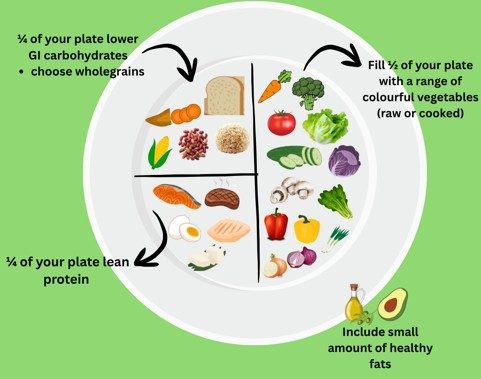
There are 3 components to building a healthy balanced meal, this includes:
- Low GI carbohydrate (fill ¼ of your plate with low GI carbohydrate sources)
- Lean protein (fill ¼ of your plate with a lean protein source)
- Vegetables (fill ½ of your plate with vegetables such as salad, raw, or cooked vegetables
Note: Incorporate a small amount of healthy fats such as avocado, extra virgin olive oil, nuts/seeds.
Tip: Use a smaller plate at mealtime as you will be less likely to overeat
- Stay Hydrated
Replace sugary beverages such as soft drink and juice for water. Staying hydrated assists with reducing our appetite and boosting metabolism aiding in weight loss.
- Stay physically active
We want to try being active on most days on the week, ideally every day.
The current physical activity guidelines state each week adults should do either:
- 2.5 to 5 hours of moderate intensity physical activity – such as a brisk walk, golf, mowing the lawn or swimming
- 1.25 to 2.5 hours of vigorous intensity physical activity – such as jogging, aerobics, fast cycling, soccer or netball
- an equivalent combination of moderate and vigorous activities.
Include a range of muscle-strengthening activities for at least 2 days of the week. For example, push-ups, squats, lunges, pull-ups, lifting weights, and household tasks involving lifting.
- Other factors such as stress and sleep that may contribute to weight gain
Stress:
Stress can play a role in weight gain. For instance, prolonged stress triggers the release of a hormone called cortisol which can lead to an increase in appetite, and cravings for foods that are high in sugar and fat during the day. A healthy balanced diet, regular exercise, and reducing stress such as doing meditation are crucial to support your health and wellbeing.
Sleep:
Ideally, we want to try have at least 7 hours of sleep per night. This is due to sleep helping in both hormone and appetite regulation. For example, poor sleep increases our hunger hormone known as “ghrelin” and decreases our satiety hormone (promoting feelings of fullness) known as “leptin”. This can lead to more cravings during the day on food that is less healthy such as food high in sugar and saturated fat (e.g. processed meats/ fatty cuts of meat, baked goods, pastries).
Weight Loss approaches
There are various weight loss approaches. Some examples are:
- Intermittent fasting: For example, one way is the 16:8 approach whereby you fast for 16 hours of the day with an 8-hour period where you can eat meals. This can look like fasting in the morning (skipping breakfast) and having your first meal of the day at 12pm and then finishing you’re eating for the day at 8pm. This approach usually works best if you don’t usually eat breakfast or can go without eating until 12pm.
- Tracking your calorie intake: This involves tracking your food intake and calories consumed throughout the day. An estimate of your daily energy requirements will be calculated by me considering factors such as age, sex, height, and activity levels. After knowing your estimated calorie requirements, specific calorie tracking apps such as easy diet diary are utilised to track your daily dietary intake and to self-monitor progress. It is important to note that this approach is not suitable for everyone.
- Meal Replacements: This approach involves replacing one, two, or three meals of the day with a meal replacement. There are many meal replacements available in the market such as Optifast and Optislim. Meal replacements are designed to be lower in calories whilst still containing essential nutrients, vitamins, and minerals. They come in a variety of options such as shakes, soups, and bars.
At Fuel Your Health we will support your weight loss journey by working closely with you to find the best approach that suits your preferences and goals.
We will ensure tailored dietetic strategies are put in place to build healthy sustainable eating habits and lifestyle choices, so long-term weight loss is best maintained.
Author: Karina Saleh (Accredited Practising Dietitian)
References